
How to Choose the Right Baby Bottle Nipple for Newborn Babies
Feeding time is a special time for a mother and her baby. For a mother who exclusively bottle feeds, or does a mixture of breast and bottle feeding, or is just expressing milk, selecting a comfortable feeding bottle for baby for her baby is essential. Many new mothers feel confused about baby bottle nipple sizes, fluctuating levels of flow, varying shapes and differing materials. Choosing the wrong baby bottle nipple shapes, flow levels, and materials may lead to fussiness, gas, choking, or feeding refusal. Therefore, it is important to understand the different types of nipples for baby bottles and when to change nipples on baby bottles to make feeding more enjoyable.
The Importance of Selecting the Right Baby Bottle Nipple
Babies are born with a very weak sucking reflex. Their mouth muscles are still developing, and they do not have fully developed coordination for swallowing. Choosing the right size and flow of the nipple will help ensure:
-
Proper feeding
-
Choking hazards are reduced
-
Less air is taken in (colic and gas are minimised)
-
Proper intake of milk
-
Better latch and easier transition from breast to bottle
Learning about the variety of baby bottle nipples available will assist you in feeding your baby based on their unique needs and not just on random selection.
The Different Sizes of Baby Bottle Nipples
While shopping for baby bottle nipples, you will notice they are labelled with age ranges and flow levels. These are known as baby bottle nipple sizes. While brands may differ in their flow levels, the difference in levels is usually consistent.
-
Slow Flow (0-3 months): Designed for newborns. The flow of milk is controlled to imitate the flow from a breast.
-
Medium Flow (3-6 months): These are recommended for babies who are able to suck strongly.
-
Fast Flow (6 months +): These are recommended for babies who are able to suck strongly and can tolerate a quicker flow from the bottle.
-
Variable Flow: These nipples allow the baby to control the flow based on their sucking strength.
Understanding Baby Bottle Nipple Size Charts
A typical baby bottle nipple size chart may display the following:
|
Nipple Size |
Flow Type |
Recommended Age |
Best For |
|
Size 0 / Preemie |
Extra Slow Flow |
Preemie babies |
Premature babies with weaker sucking reflex |
|
Size 1 |
Slow Flow |
0–3 months |
Newborns adjusting to bottle feeding |
|
Size 2 |
Medium Flow |
3–6 months |
Babies developing stronger sucking ability |
|
Size 3 |
Fast Flow |
6+ months |
Babies who can handle quicker milk flow |
|
Size 4 |
Variable Flow |
9+ months |
Older babies who can control milk flow based on suction strength |
It is important to note that each baby develops at their own pace. If your baby is a newborn and is coughing or spitting milk, the flow may be too fast. If your baby is becoming very frustrated and the feed is taking over 30 minutes, the flow may be too slow.
It is often good to use your baby’s cues to assess the flow; age is only one factor.
Types of Nipples for Baby Bottles
There are various baby bottle nipple types designed for different feeding requirements.
1. Standard (Traditional) Nipples: Rounded and dome-shaped. Suitable for the majority of babies.
2. Orthodontic Nipples: One side is flattened to aid in customary oral development.
3. Wide Neck Nipples: These are designed to resemble the shape of mommy breasts, perfect for mixed feeding.
4. Anti-Colic Nipples: These contain special air vents that are designed to combat gas and infant colic.
5. Silicone vs Latex Nipples
-
Silicone Nipples: more durable, odourless, & firmer
-
Latex Nipples: softer, more flexible, but wear out faster
Your choice in variation of baby bottle nipples will depend largely on your baby’s comfort & feeding response.
Baby Bottle Nipples: How long do they last?
A question most mothers ask is: how long do baby bottle nipples last? On average, this is what mothers have observed as a result of their experiences:
-
Silicone nipples last 2-3 months on average
-
Latex nipples last 4-6 weeks on average
However, the above still depend on how frequently they are used and how they are sterilised.
As for how long the baby bottle nipples last? Replace them if you notice:
-
Cracks
-
Tears
-
Discoloration
-
Sticky/oily/swollen
-
Milk is flowing too fast
Regular checks are a part of feeding your child safely.
When Should You Replace Baby Bottles?
When you ask when to change nipples on baby bottles, you are not alone. You should consider switching nipple size if:
-
Baby takes longer than 30 minutes to finish a bottle
-
Baby becomes frustrated during feeding
-
Baby falls asleep mid-feed repeatedly
-
Baby shows strong sucking effort
As your baby grows and requires more milk to fuel their growth, you will also need to change the nipples on the baby bottles.
Incorrect Nipple Flow Signs
Flow too fast:
-
Gags/chokes
-
Milk spills
-
Coughs a lot
Flow too slow:
-
Grabs/tugs nipple
-
Is fussy
-
May fall asleep before he/she is done
Patterns you see while your baby is feeding will tell you when to change the baby's bottle nipples.
Is It Safe to Increase the Hole in Baby Bottle Nipples?
Many moms ask whether it is safe to increase the hole in baby bottle nipples. Experts say not to do this, as it can:
-
Cause your baby to choke
-
Create an unpredictable milk flow
-
Increase aspiration risk
Instead of modifying nipples, it is best to switch to a nipple that is designed to create a controlled flow.
Choosing the Right Feeding Bottle for Baby
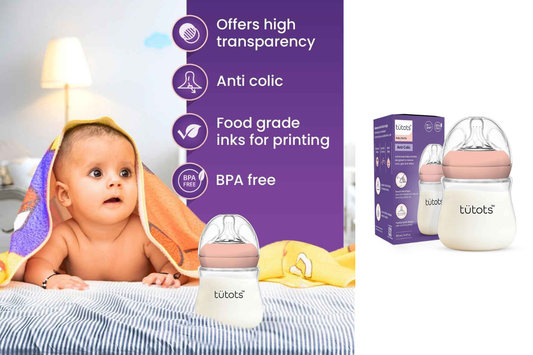
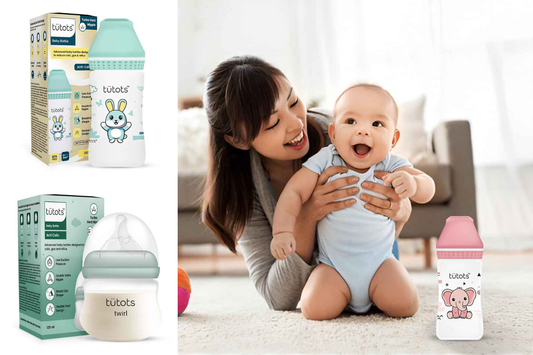
The best feeding bottle for a baby is the one that meets the baby’s feeding preferences and is compatible with the correct baby nipple.
The feeding bottle should be:
-
made of BPA-free materials
-
have an anti-colic vent included
-
easy to clean
-
ergonomically shaped to support an easy grip
-
adaptable to different nipple sizes
The ideal bottle will enable your baby to suck as naturally as possible and will allow for minimal air intake.
Tips for New Mothers: Making Bottle Feeding Easier
Here are helpful tips to make feeding easier:
-
Sterilise nipples and bottles routinely.
-
Every 2 to 3 months, replace the nipples.
-
Do not overtighten the caps (it will affect the flow).
-
Check the flow of milk before the feeding.
-
Trust your baby’s cues before the charts.
Creating a flexible approach will make your baby feel more secure and comfortable.
Switching from Breast to Bottle
For combination feeding, use wide-neck nipples to help mimic the breastfeeding process and help prevent nipple confusion. Make sure to use a slow-flow nipple to help mimic breast milk flow.
When transitioning, consistency and patience are important.
Maintenance of Baby Bottle Nipples
Good maintenance prolongs the lifespan of the bottles.
-
Wash after each feeding
-
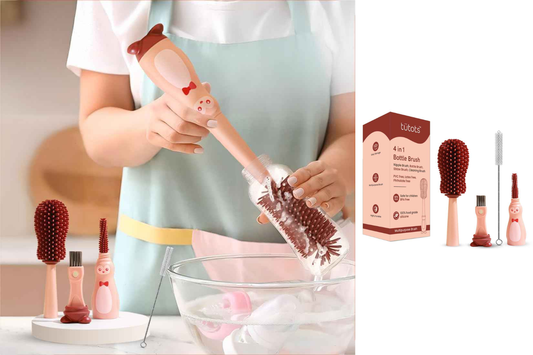
Use bottle brushes to clean the vents
-
Newborns: Sterilise daily
-
Babies: Air dry completely
-
Use clean and covered containers for storage
Microwave sterilisation should be avoided for nipples showing signs of wear because the heat will accelerate the damage.
Feeding and Growth Stages
As your baby grows, the following will occur:
-
Continual increase of sucking strength
-
Feeding duration will decrease
-
Babies will drink more
-
Around 6 months, solids will be introduced
The above explains why baby bottle nipple sizes need to change.
Common Mistakes New Mothers Make
-
Too soon a switch to fast flow
-
Manual enlarging of nip holes
-
Not noticing signs of nipple damage
-
Incorrect nipple shape for baby's latch
-
Not reviewing the baby bottle nipple size chart before purchasing
Knowing what these mistakes are can make it easier to avoid them.
Tutots: Your Baby’s Trusted Growth Partner
Tutots, after much research and study, make safe and comfortable feeding products for infants. These products are made from baby-friendly materials and have a focus on utility. With these products, mothers can trust baby care products, and infants can trust that they will be able to feed. Quality and safety are the most important aspects of feeding products and accessories.
Conclusion
Though selecting a baby bottle nipple can feel overwhelming, understanding baby bottle nipple sizes, examining a baby bottle nipple size chart, and familiarising yourself with different types of nipples for baby bottles can simplify the process. What’s most important is observing your baby’s feeding habits, as they are the most reliable indicator of when you need to change nipples on baby bottles.
Instead of unsafe practices, like how to increase the hole size in a baby bottle nipple, look for safe flow change options. With careful selection, observation and a little patience, you can ensure a safe and comfortable feeding routine for your baby.
FAQs About Choosing the Right Newborn Baby Bottle Nipple
Q1. How do I know if my newborn needs a different nipple flow size?
Ans. If your baby takes more than 30 minutes to finish a bottle, seems frustrated while sucking, or frequently falls asleep mid-feed, the flow may be too slow. If they gag or cough, it may be too fast. Observe feeding cues before switching.
Q2. Can switching nipple brands affect my baby’s feeding pattern?
Ans. Yes, different brands design nipples with varying shapes, vent systems, and flow speeds. Even if labelled the same size, milk flow can differ. Introduce a new nipple gradually and monitor your baby’s comfort and digestion.
Q3. Is it normal for babies to refuse a new nipple?
Ans. Yes, some babies resist change because they are used to a specific shape or texture. Offer the new nipple when your baby is calm and slightly hungry, and give them time to adjust over a few days.
Q4. How often should I sterilise baby bottle nipples?
Ans. For newborns, sterilise nipples daily, especially in the first few months. After that, thorough washing with hot soapy water and occasional sterilisation is generally sufficient unless your paediatrician advises otherwise.
Q5. Can nipple shape influence oral development?
Ans. Yes, orthodontic or breast-shaped nipples are designed to support natural tongue movement and jaw development. Choosing the right shape can promote healthy sucking patterns and reduce feeding difficulties.
Tags:
Previous
A Complete Guide to Baby Bibs: Types, Uses & Buying Tips
Next
How to Choose the Perfect Baby Body Lotion for Summers
Related articles
A Complete Guide to Anti Colic Feeding Bottles
Jun 01 2026